
Egyptian · Cairo street food; popular nationwide during Ramadan · dessert
Balah el Sham (Egyptian Fried Choux in Syrup)
بلح الشام
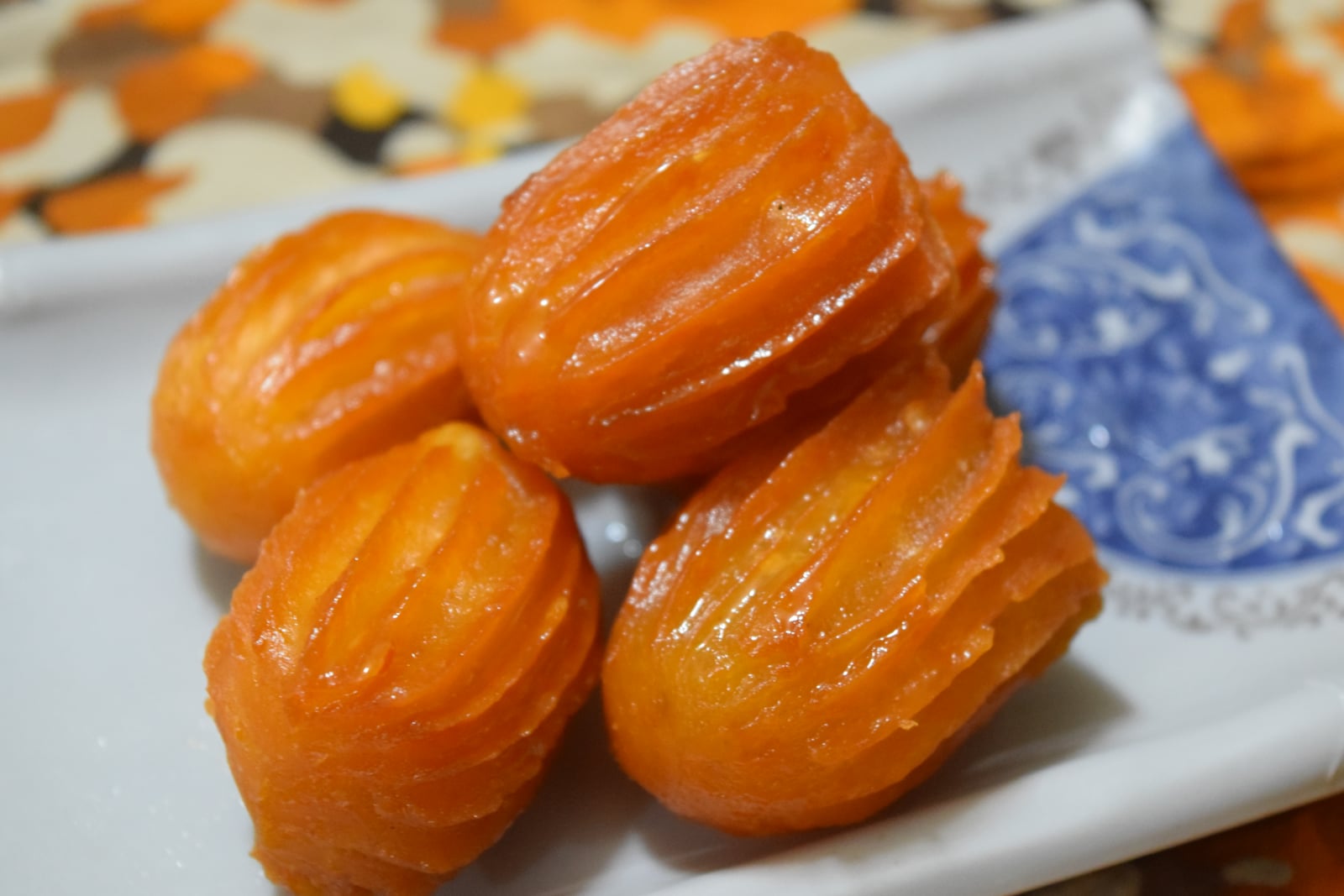
Balah el Sham — 'dates of Damascus' — are crisp, hollow fried pastries made from choux dough piped into ridged ovals that mimic the shape of fresh dates. They're dunked hot from the oil straight into a fragrant cardamom-rose syrup, which seeps into the hollow center and lacquers the ridged crust. In Egypt, they're a Ramadan fixture — piled high at street stalls after iftar — but they're genuinely easy enough to make at home any time you want something spectacular that costs almost nothing.
Scan to log · 1845 kcal · 6g protein
Point a phone camera at the code to open this recipe — or scan it from a printout to drop today's serving straight into your food log.
Add to today's log →Prep
20 min
Cook
35 min
Rest
10 min
Total
65 min
Servings
6
Difficulty
Medium
What you need
Ingredients
water
1 cup
240ml
unsalted butter
4 tablespoons (1/2 stick)
55g
granulated sugar (for dough)
1 teaspoon
4g
fine salt
1/4 teaspoon
1.5g
all-purpose flour
1 cup
130g
large eggs
3 large
150g (shelled)
neutral oil for frying (vegetable or corn oil)
4 cups
960ml
granulated sugar (for syrup)
2 cups
400g
water (for syrup)
1 cup
240ml
fresh lemon juice
1 tablespoon
15ml
ground cardamom
1/2 teaspoon
1.2g
vanilla extract plus almond extract (syrup flavoring)
1/2 teaspoon vanilla extract + 1/8 teaspoon almond extract
2.5ml vanilla + 0.6ml almond
Substitution · accessibility
Original: rose water (1 tablespoon). Rose water is the traditional flavoring in Egyptian attar syrup and gives balah el sham its signature floral character. This vanilla-plus-almond combination approximates a faintly floral warmth but is noticeably different — the result is pleasant but less authentically Egyptian. If you can find rose water (check the international or Middle Eastern aisle at Wegmans, Whole Foods, or Trader Joe's, or any Middle Eastern grocery), use 1 tablespoon in place of both extracts and add it off-heat exactly as the original recipe directs.
How to cook it
Steps
- 01
12 min
Make the syrup first so it's ready and warm when the pastries come out of the oil. Combine 2 cups sugar and 1 cup water in a small saucepan over medium heat. Stir until the sugar dissolves, then stop stirring and bring to a gentle boil. Add the lemon juice and cardamom. Simmer uncovered for 8–10 minutes until the syrup is slightly thickened — it should coat a spoon lightly but not be candy-thick. Remove from heat, stir in the vanilla extract and almond extract, and set aside. The syrup should stay warm; you can reheat it gently if it cools too much.
- 02
4 min
Make the choux dough. Combine 1 cup water, butter, 1 teaspoon sugar, and salt in a medium saucepan over medium-high heat. Stir occasionally until the butter melts fully and the mixture comes to a rolling boil.
- 03
4 min
Remove the pan from heat and add all the flour at once. Stir vigorously with a wooden spoon or stiff spatula until the dough comes together into a smooth ball with no dry streaks. Return to medium heat and stir constantly for 1–2 minutes — you want to dry the dough out slightly; it will pull away from the sides cleanly and a thin film will form on the pan bottom. This step matters: under-dried dough absorbs too much oil.
- 04
8 min
Transfer the dough to a bowl (or leave in the pan off heat) and let it cool for 5 minutes — you need it warm but not hot enough to scramble the eggs. Beat in the eggs one at a time, mixing thoroughly after each addition. The dough will look slippery and separated at first; keep stirring and it will come back together into a smooth, glossy, pipeable paste. It should fall from a spoon in a thick ribbon. If it seems stiff, beat in a tablespoon of water.
- 05
3 min
Fit a piping bag with a large open-star tip (a 1M or 6B tip works great — the ridges are what give balah el sham their characteristic date-like texture). Fill the bag with the dough. If you don't have a piping bag, a sturdy zip-top bag with one corner snipped and a fork dragged along the outside of each piped piece to add ridges works in a pinch.
- 06
6 min
Pour the frying oil into a wide, deep saucepan or Dutch oven to a depth of at least 3 inches. Heat over medium to 340°F / 170°C. Use a thermometer if you have one — too hot and the outsides brown before the dough cooks through; too cool and they absorb oil. Line a sheet pan with a wire rack or paper towels nearby.
- 07
20 min
Pipe the dough directly over the hot oil in 2½-to-3-inch lengths, snipping each piece off with kitchen scissors or a knife as you go. Work in batches of 6–8 pieces — don't crowd the pan. They will puff and expand. Fry, turning occasionally with a slotted spoon, for 6–8 minutes per batch until deep golden brown all over. They need more time than you'd expect; pale ones will be doughy inside. Drain briefly on the rack.
- 08
5 min
While still hot, drop the fried pastries directly into the warm syrup. Let them sit for 30–60 seconds, turning once so all sides are coated and the syrup soaks into any cracks. Transfer to a serving plate. Repeat with remaining dough, frying and syruping each batch before starting the next.
- 09
10 min
Let the finished balah el sham rest on the plate for 10 minutes before serving — the syrup sets to a light glaze and the pastries firm up slightly. Serve at room temperature or just warm, piled generously. They are best the day they're made.
Chef notes
Notes & variations
The star piping tip is not optional for authenticity — those ridges hold the syrup and give the pastry its namesake date texture. A plain round tip produces something more like a churro (still delicious, just not balah el sham).
Frying temperature is the main variable to manage. If your first batch browns too fast on the outside, lower the heat and give them longer. A hollow center only forms when the dough has time to steam from the inside — rushing it with high heat seals the outside before that can happen.
The syrup should be warm but not boiling when you add the pastries. Hot syrup on hot pastry soaks in; cold syrup just coats the outside.
This recipe uses vanilla and almond extract in place of the traditional rose water. If you can source rose water (international aisle at Whole Foods, Wegmans, or Trader Joe's, or any Middle Eastern market), swap in 1 tablespoon off-heat for a much more authentic result — the floral note is a defining character of Egyptian attar syrup.
For a Ramadan spread, serve alongside qatayef, kunafa, and a pot of karkadeh (hibiscus tea) — the tartness of the tea cuts the sweetness beautifully.
Leftover syrup keeps indefinitely in the fridge and is excellent over pancakes, in tea, or drizzled on basbousa.
Per serving
Nutrition
Calories
1845
Protein
5.9 g
Carbs
83.5 g
Fat
170.1 g
Fiber
0.1 g
Sugars
67.4 g
Sat fat
21.5 g
Sodium
135 mg
Minerals & vitamins
Potassium
5 mg
Calcium
25 mg
Iron
1.1 mg
Magnesium
1 mg
Vit D
0 IU
Vit B12
0 mcg
Cholesterol
112 mg
Glycemic profile
GI
64.9
GL
54.2
- · LLM tiebreak failed for "rose water" — picked first result as fallback
Storage
How long it keeps
Fridge
7 days
Freezer
2 months
Room temp
72 hours
Reheating · Baklava, basbousa, namoura. Sugar acts as a preservative — many keep 3 days at room temp.
Source: foodkeeper
Real products
Where to buy
Real grocery products surfaced via Open Food Facts. Click a product to see its OFF page (ingredients, allergens, Nutri-Score breakdown).
water
unsalted butter
granulated sugar (for dough)
fine salt
all-purpose flour
large eggs
granulated sugar (for syrup)
water (for syrup)
fresh lemon juice
- Evolution fresh, vegetable and fruit juice blend, sweet greens and lemon, sweet greens and lemon
Evolution Fresh
Nutri-Score B
ground cardamom
rose water


On the same table
Pairs with
Egyptian · dessert
Basbousa (Semolina Yogurt Cake)
Basbousa is Egypt's beloved semolina cake — dense, moist, and fragrant with citrus and warm vanilla. It's served at celebrations and everyday gatherings alike, cut into diamonds and soaked in syrup while still hot so every bite is tender all the way through. Egyptian basbousa leans a touch less sweet than its Lebanese cousin namoura, letting the yogurt's gentle tang and the semolina's nuttiness come forward. Note: authentic basbousa is perfumed with rose water and orange blossom water; this version substitutes fresh orange zest and a hint of almond extract for supermarket accessibility — the cake is wonderful, but the true floral character comes through only with the traditional waters.
Egyptian · dessert
Umm Ali (Egyptian Bread Pudding)
Umm Ali is Egypt's most beloved dessert — a hot, bubbling bake of torn pastry soaked in sweetened milk, crowned with nuts, raisins, and coconut that toast golden in the oven. It's named for a legendary figure from medieval Cairo and has been feeding celebrations and ordinary Tuesday nights ever since. Think bread pudding crossed with rice pudding, but richer and more festive than either.
Egyptian · beverage
Karkadeh (Egyptian Hibiscus Tea)
Karkadeh is Egypt's most beloved cold drink — a deep ruby brew of dried hibiscus flowers, tart and floral, sweetened to taste and served over ice or warm from the pot. It's the drink of Ramadan iftar tables, summer afternoons, and wedding celebrations alike, and it happens to be naturally caffeine-free and brilliantly refreshing.