
Egyptian · Nationwide; especially associated with Upper Egypt and Ramadan traditions · beverage
Karkadeh (Egyptian Hibiscus Tea)
كركديه
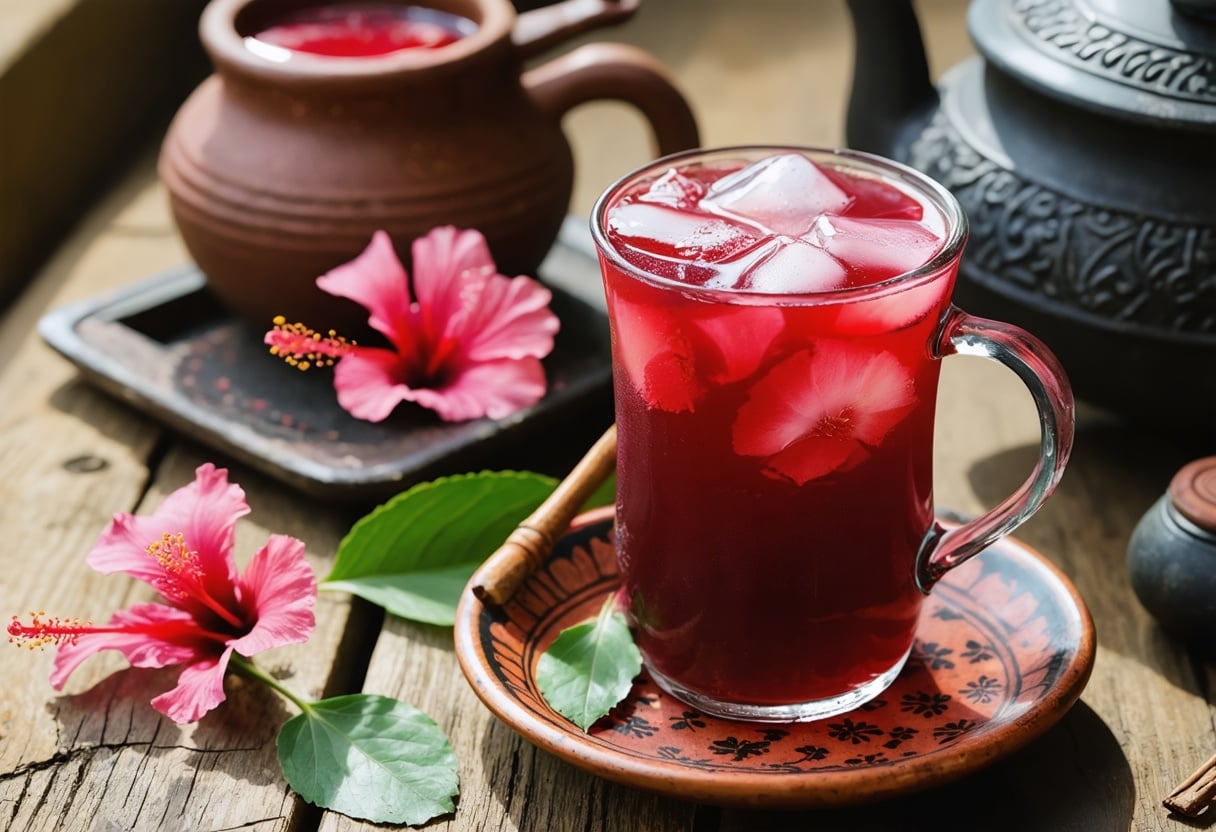
Karkadeh is Egypt's most beloved cold drink — a deep ruby brew of dried hibiscus flowers, tart and floral, sweetened to taste and served over ice or warm from the pot. It's the drink of Ramadan iftar tables, summer afternoons, and wedding celebrations alike, and it happens to be naturally caffeine-free and brilliantly refreshing.
Scan to log · 49 kcal · 0g protein
Point a phone camera at the code to open this recipe — or scan it from a printout to drop today's serving straight into your food log.
Add to today's log →Prep
5 min
Cook
10 min
Rest
30 min
Total
45 min
Servings
4
Difficulty
Easy
What you need
Ingredients
dried hibiscus flowers (dried roselle / Jamaica flowers)
1 cup loosely packed
25g
Substitution · hard-to-find
Original: Egyptian dried karkadeh flowers (Hibiscus sabdariffa). Dried hibiscus flowers sold as 'Jamaica' or 'flor de Jamaica' at Latin grocery stores are the exact same plant and work perfectly. Whole Foods and online retailers also carry them. Avoid hibiscus herbal tea bags — the flavor is weak and often blended.
water
4 cups
950ml
granulated white sugar
3–4 tablespoons (to taste)
38–50g
fresh lemon juice (optional)
1 tablespoon
15ml
How to cook it
Steps
- 01
1 min
Rinse the dried hibiscus flowers briefly under cold water in a fine mesh strainer to remove any dust. This takes about 30 seconds — don't soak them.
- 02
10 min
Bring the 4 cups of water to a full boil in a medium saucepan. Add the rinsed hibiscus flowers, stir once, then reduce heat to medium-low. Simmer for 8–10 minutes — the water will turn a vivid, deep ruby red. The longer you simmer, the more intense and slightly more tannic the flavor gets; 8 minutes is bright and fruity, 10 minutes is bolder.
- 03
2 min
Remove from heat. Add sugar while the liquid is still hot and stir until fully dissolved. Start with 3 tablespoons — you can always sweeten individual glasses later. Taste and adjust. Add the lemon juice now if using; it brightens the color and sharpens the tartness.
- 04
2 min
Strain through a fine mesh strainer into a heatproof pitcher, pressing gently on the flowers to extract all the liquid. Discard the spent flowers.
- 05
30 min
For iced karkadeh (the summer standard): let the pitcher cool on the counter for 15 minutes, then refrigerate for at least 30 minutes until cold. Serve over ice. For hot karkadeh (the Ramadan iftar version): pour directly into glasses or small tea cups and serve immediately.
Chef notes
Notes & variations
The cold version is far more common in Egypt — it's one of the great summer drinks of the Arab world. Don't skip the chill time; it tastes noticeably better cold than just room-temperature.
For a Ramadan iftar spread, karkadeh is traditionally served alongside dates and soup. The tartness cuts through the sweetness of dates beautifully.
You can make a concentrate: use the same amount of flowers with only 2 cups of water, simmer 10 minutes, strain, then dilute to taste when serving. This keeps in the fridge for up to a week.
Some Egyptian families add a small cinnamon stick or two whole cloves to the simmering pot for a spiced version — especially nice served warm in winter.
Sugar level is genuinely personal here. Egyptians tend to drink it quite sweet; if you prefer tart, use 1–2 tablespoons or let guests sweeten their own glasses.
Per serving
Nutrition
Calories
49
Protein
0 g
Carbs
12.7 g
Fat
0 g
Fiber
0 g
Sugars
0.1 g
Sat fat
0 g
Sodium
10 mg
Minerals & vitamins
Potassium
4 mg
Calcium
7 mg
Iron
0 mg
Magnesium
3 mg
Vit D
0 IU
Vit B12
0 mcg
Cholesterol
0 mg
Glycemic profile
GI
64.1
GL
8.1
Storage
How long it keeps
Fridge
3 days
Room temp
8 hours
Pantry
12 months
Reheating · Brewed: refrigerate within 1 hour. Dry: store airtight in a cool, dark cabinet.
Source: foodkeeper
Real products
Where to buy
Real grocery products surfaced via Open Food Facts. Click a product to see its OFF page (ingredients, allergens, Nutri-Score breakdown).
water
granulated white sugar
fresh lemon juice (optional)
- Evolution fresh, vegetable and fruit juice blend, sweet greens and lemon, sweet greens and lemon
Evolution Fresh
Nutri-Score B


On the same table
Pairs with
Egyptian · breakfast
Foul Medames (Slow-Cooked Fava Beans)
Foul medames is Egypt's national breakfast — a dish so woven into daily life that the word 'aish,' meaning bread, also means life itself, and foul is what you eat with it every morning. Small fava beans are slow-cooked until creamy, then dressed at the table with olive oil, lemon, cumin, and raw garlic, and scooped up with warm flatbread. It's humble, ancient, and deeply satisfying in a way that no amount of brunch innovation has managed to improve upon.
Egyptian · dessert
Umm Ali (Egyptian Bread Pudding)
Umm Ali is Egypt's most beloved dessert — a hot, bubbling bake of torn pastry soaked in sweetened milk, crowned with nuts, raisins, and coconut that toast golden in the oven. It's named for a legendary figure from medieval Cairo and has been feeding celebrations and ordinary Tuesday nights ever since. Think bread pudding crossed with rice pudding, but richer and more festive than either.