
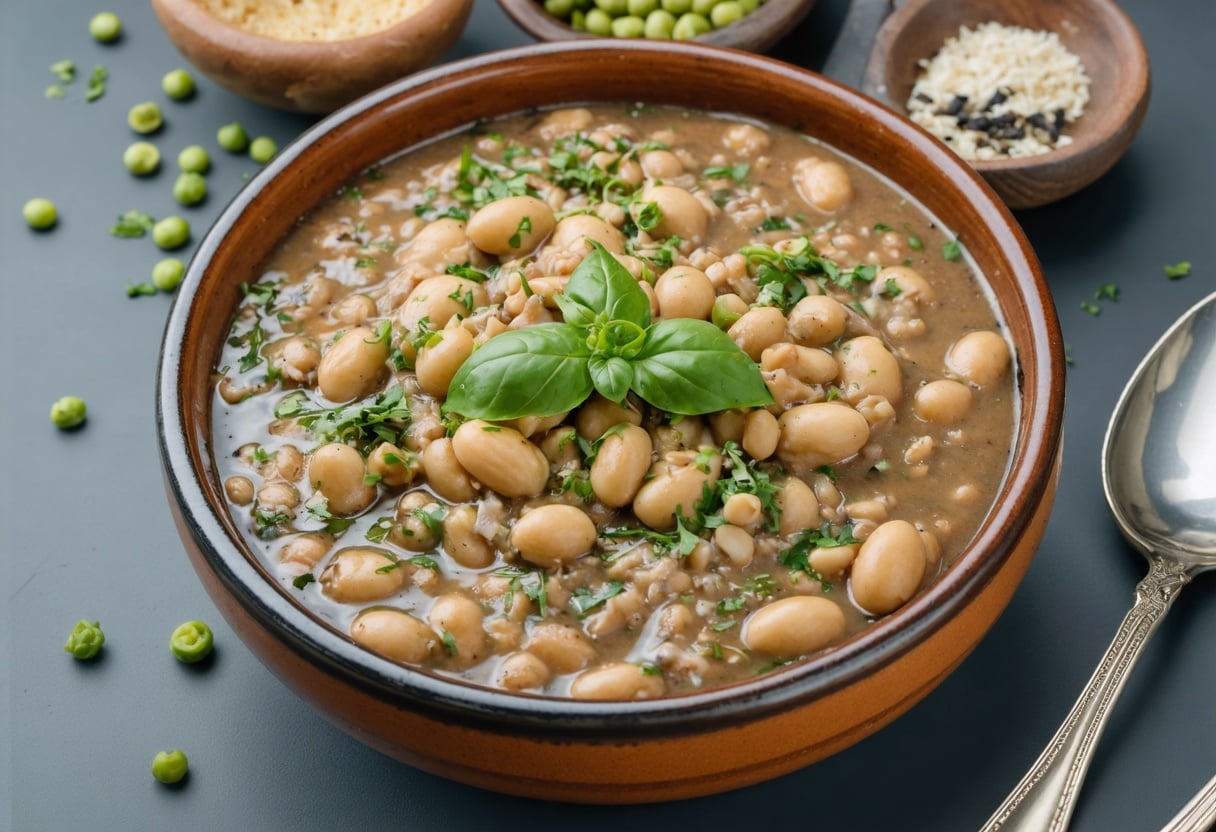
Egyptian · Nationwide; the dish predates modern Egypt by millennia · breakfast
Foul Medames (Slow-Cooked Fava Beans)
فول مدمس
Foul medames is Egypt's national breakfast — a dish so woven into daily life that the word 'aish,' meaning bread, also means life itself, and foul is what you eat with it every morning. Small fava beans are slow-cooked until creamy, then dressed at the table with olive oil, lemon, cumin, and raw garlic, and scooped up with warm flatbread. It's humble, ancient, and deeply satisfying in a way that no amount of brunch innovation has managed to improve upon.
Scan to log · 465 kcal · 28g protein
Point a phone camera at the code to open this recipe — or scan it from a printout to drop today's serving straight into your food log.
Add to today's log →Prep
15 min
Cook
30 min
Rest
480 min
Total
525 min
Servings
4
Difficulty
Easy
What you need
Ingredients
dried small fava beans (ful medames variety, skin-on)
1 1/2 cups
300g
Substitution · hard-to-find
Original: dried small Egyptian fava beans (ful medames). Canned small fava beans (15 oz / 425g, drained and rinsed) work well and cut the overnight soak and long simmer — skip steps 1–2 and proceed from step 3, simmering canned beans for just 15 minutes to warm through and soften slightly. Look for 'ful medames' cans at Middle Eastern grocers or online; they're already the right variety.
water, for soaking
6 cups
1440ml
water, for cooking
5 cups
1200ml
garlic cloves, minced
4 cloves
16g
ground cumin
1 1/2 tsp
4g
kosher salt
1 1/4 tsp
7g
fresh lemon juice (about 2 lemons)
1/4 cup
60ml
extra-virgin olive oil, for finishing
1/4 cup
60ml
fresh flat-leaf parsley, roughly chopped
1/2 cup loosely packed
15g
ripe tomato, finely diced
1 medium (about 3/4 cup)
130g
red onion or white onion, finely diced
1/4 cup
40g
ground coriander
1/2 tsp
1g
crushed red pepper flakes or pinch of cayenne (optional, for heat)
1/4 tsp
0.5g
whole wheat pita bread, warmed
4 rounds
280g
Substitution · authenticity note
Original: aish baladi (Egyptian whole-grain flatbread). Whole wheat pita is the closest widely available substitute. Aish baladi is thicker and more rustic than standard pita — if you find it at a Middle Eastern bakery, grab it. Any hearty flatbread works; the point is to scoop, not to use a fork.
How to cook it
Steps
- 01
5 min
The night before (or at least 8 hours ahead): Rinse the dried fava beans in a colander under cold water, picking out any small stones or shriveled beans. Place them in a large bowl and cover with 6 cups (1440ml) of cold water — the beans will swell considerably, so make sure there's plenty of room. Leave to soak at room temperature for 8 hours or overnight.
- 02
120 min
Drain and rinse the soaked beans. Transfer them to a medium saucepan and add 5 cups (1200ml) of fresh cold water. Bring to a boil over high heat, then skim off any foam that rises to the surface. Reduce heat to the lowest setting your stove allows, cover the pot, and cook for 1 hour 30 minutes to 2 hours, until the beans are completely tender and a few have begun to split. Check the water level every 30 minutes — add a splash if the beans look dry. Do not add salt yet; salting early toughens the skins.
- 03
5 min
Once the beans are fully tender, add the salt, ground cumin, and ground coriander directly to the pot. Stir gently and cook uncovered for another 5 minutes over low heat so the spices bloom into the beans. Taste and adjust salt.
- 04
3 min
Now mash — but only partially. Use the back of a large spoon or a potato masher to crush roughly half the beans against the side of the pot, leaving the rest whole. This gives you the classic foul texture: creamy and thick but still with body. If the mixture looks too thick, stir in a splash of warm water until it moves like a loose porridge.
- 05
2 min
Add the minced garlic and the lemon juice, stirring them in off the heat (or over the lowest flame). The garlic goes in raw here — that sharp, pungent bite is essential to foul medames. Stir well and taste again; foul should be assertively lemony and garlicky.
- 06
3 min
Ladle the beans into shallow bowls or a wide serving dish. Drizzle the olive oil generously over the top — don't be shy, this is not a garnish, it's a key part of the flavor and richness. Scatter the diced tomato, diced onion, and chopped parsley over the surface. Add crushed red pepper or cayenne if you like heat.
- 07
2 min
Serve immediately with warm whole wheat pita on the side. The traditional way to eat foul is to tear off a piece of bread, fold it into a scoop, and drag it through the beans — no cutlery required, and no apology needed for the mess. Extras like a hard-boiled egg on the side, a drizzle of tahini, or a pile of pickled vegetables (torshi) are all welcome.
Chef notes
Notes & variations
Canned shortcut: A 15 oz (425g) can of fava beans (drained and rinsed) gets you to the table in under 30 minutes. The texture won't be quite as silky as dried-and-slow-cooked, but on a weekday morning it's entirely respectable. Warm the canned beans in a small saucepan with a splash of water over medium-low heat for about 15 minutes before proceeding from step 3.
The overnight soak is the real traditional method — Egyptian families historically left the pot on the lowest possible flame overnight (the word 'medames' relates to being buried or slow-cooked). If you have a slow cooker, soak the beans, then cook on LOW for 8–10 hours. It's as close to the original method as a modern kitchen gets.
Tahini variation: Many Egyptian households drizzle 2–3 tbsp of tahini over the finished bowl alongside the olive oil. Egyptian tahini sauce often includes a splash of vinegar and a pinch of cumin — stir those in if you're using it.
Fried garlic finish: For a smokier, more intense flavor, skip the raw garlic in step 5 and instead fry 4 thinly sliced garlic cloves in 2 tbsp of olive oil over medium heat until golden brown (about 2 minutes), then pour the whole pan — oil and all — over the finished bowl. This is a classic Egyptian finishing technique used across soups and bean dishes.
Leftovers keep well refrigerated for 3 days. The beans thicken as they sit; thin with a little warm water when reheating and re-season with lemon.
Per serving
Nutrition
Calories
465
Protein
27.5 g
Carbs
88.2 g
Fat
2.8 g
Fiber
24 g
Sugars
7.5 g
Sat fat
2.7 g
Sodium
1039 mg
Minerals & vitamins
Potassium
1066 mg
Calcium
130 mg
Iron
8.4 mg
Magnesium
210 mg
Vit D
0 IU
Vit B12
0 mcg
Cholesterol
0 mg
Glycemic profile
GI
51.2
GL
45.2
Storage
How long it keeps
Fridge
4 days
Freezer
2 months
Room temp
2 hours
Reheating · Reheat gently with water or broth. Flavor often improves on day 2.
Source: foodkeeper
Real products
Where to buy
Real grocery products surfaced via Open Food Facts. Click a product to see its OFF page (ingredients, allergens, Nutri-Score breakdown).
water, for soaking
water, for cooking
garlic cloves, minced
- Whole garlic cloves in brine
Nutri-Score C
ground cumin
kosher salt
fresh lemon juice (about 2 lemons)
- Evolution fresh, vegetable and fruit juice blend, sweet greens and lemon, sweet greens and lemon
Evolution Fresh
Nutri-Score B
extra-virgin olive oil, for finishing
ripe tomato, finely diced
ground coriander
whole wheat pita bread, warmed


On the same table
Pairs with
Egyptian · mezze
Ta'ameya (Egyptian Fava Bean Falafel)
Ta'ameya is Egypt's falafel — and Egyptians will tell you, firmly, that theirs came first. Made from soaked split fava beans (never chickpeas), they fry up with a shatteringly crisp sesame crust and a vivid green, herb-packed interior. Street vendors in Cairo sell them by the bag from dawn onward, tucked into aish baladi with tomato and tahini. Make a batch on a weekend morning and you'll understand why.
Egyptian · mezze
Salata Baladi (Egyptian Country Salad)
Salata baladi — 'country salad' — is on every Egyptian table, every single day. It's not a side dish in the Western sense; it's the fresh, bright counterpoint to rich stews, grilled meats, and foul. The key is the knife work: everything finely chopped, almost minced, so each forkful (or piece of bread) catches a little of everything at once.