
Egyptian · Nationwide; especially associated with Cairo street food culture · mezze
Ta'ameya (Egyptian Fava Bean Falafel)
طعمية
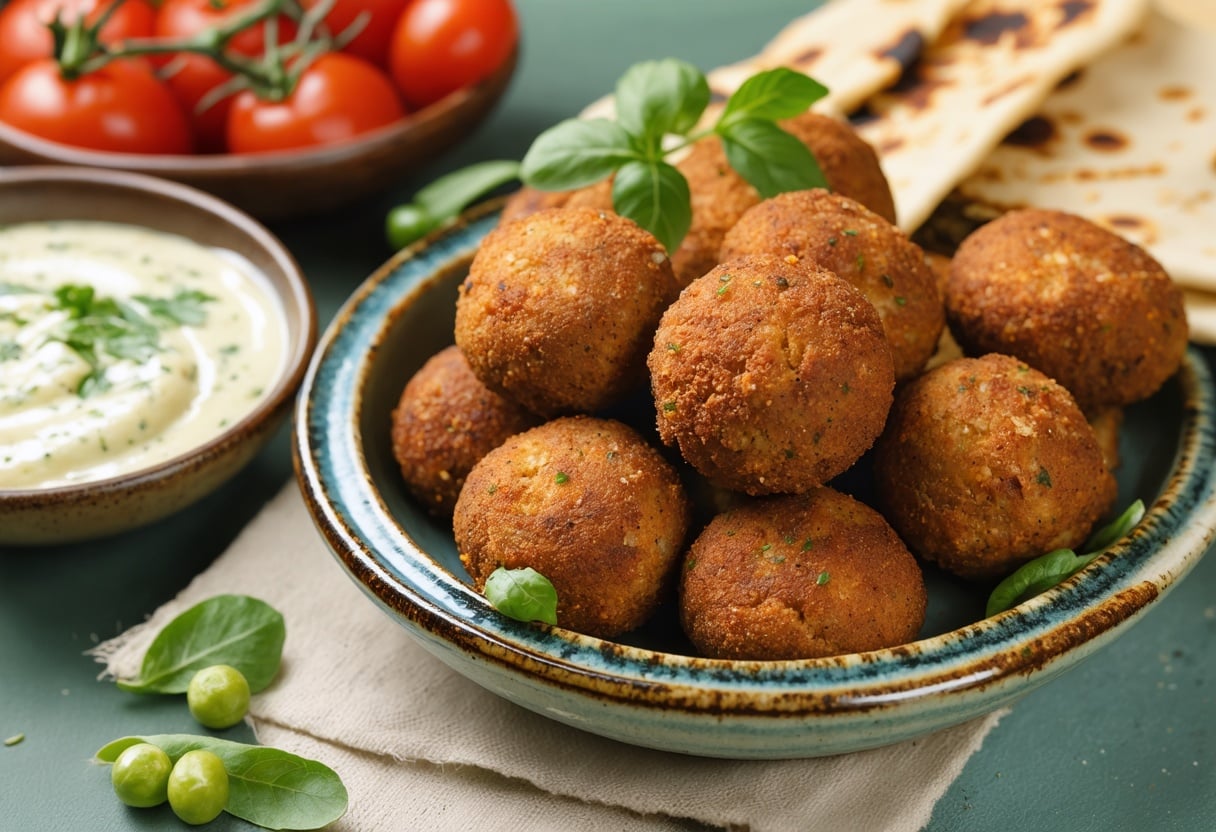
Ta'ameya is Egypt's falafel — and Egyptians will tell you, firmly, that theirs came first. Made from soaked split fava beans (never chickpeas), they fry up with a shatteringly crisp sesame crust and a vivid green, herb-packed interior. Street vendors in Cairo sell them by the bag from dawn onward, tucked into aish baladi with tomato and tahini. Make a batch on a weekend morning and you'll understand why.
Scan to log · 2329 kcal · 31g protein
Point a phone camera at the code to open this recipe — or scan it from a printout to drop today's serving straight into your food log.
Add to today's log →Prep
30 min
Cook
20 min
Rest
720 min
Total
770 min
Servings
4
Difficulty
Medium
What you need
Ingredients
dried split fava beans (peeled/skinless), soaked overnight
2 cups dry
360g dry
Substitution · specialty
Original: Egyptian dried split fava beans (ful nabed). Look for skinless/split dried fava beans at Middle Eastern grocers or online. Do NOT use canned fava beans — they are too wet and the ta'ameya will fall apart. Dried chickpeas soaked overnight can substitute in a pinch, but the result will be Levantine falafel, not ta'ameya.
fresh flat-leaf parsley, roughly chopped
1 cup packed
40g
fresh cilantro, roughly chopped
1 cup packed
40g
fresh dill, roughly chopped
1/2 cup packed
20g
yellow onion, roughly chopped
1 medium (about 1 cup)
150g
garlic cloves
4 cloves
20g
ground cumin
1 1/2 tsp
4g
ground coriander
1 tsp
2g
cayenne pepper
1/4 tsp
0.5g
fine salt
1 1/2 tsp
9g
black pepper, freshly ground
1/2 tsp
1g
baking soda
1/2 tsp
3g
sesame seeds (white, unhulled preferred)
1/2 cup
70g
neutral oil for frying (corn oil, vegetable oil, or sunflower oil)
3 cups
720ml
whole wheat pita bread, for serving
4 rounds
240g
Substitution · specialty
Original: aish baladi (Egyptian whole-grain flatbread). Whole wheat pita is the best widely available substitute. If you can find aish baladi at a Middle Eastern bakery, it has a heartier, slightly sour flavor worth seeking out.
tahini
1/4 cup
60g
lemon juice, freshly squeezed
2 tbsp
30ml
white wine vinegar
1 tsp
5ml
water, for thinning tahini sauce
3–4 tbsp
45–60ml
roma tomatoes, sliced
2 medium
240g
pickled vegetables (any store-bought mix — turnips, cucumbers, peppers)
1/2 cup
80g
How to cook it
Steps
- 01
5 min
The night before (or at least 12 hours ahead): Place the dried split fava beans in a large bowl and cover with cold water by at least 3 inches — they'll swell considerably. Let soak at room temperature for 12–18 hours. When ready, they should feel soft enough to dent easily with a fingernail but still raw and firm at the center. Drain and rinse well.
- 02
10 min
Make the ta'ameya mixture: In a food processor, combine the drained fava beans, parsley, cilantro, dill, onion, and garlic. Pulse in short bursts — you want a coarse, slightly gritty paste, not a smooth purée. Stop and scrape down the sides as needed. The mixture should hold together when you squeeze a small amount in your fist. If it's too wet, the favas may have over-soaked; spread the mixture on a clean towel for 10 minutes to dry slightly.
- 03
5 min
Season the mixture: Transfer to a large bowl. Add the cumin, coriander, cayenne, salt, and black pepper. Mix thoroughly with your hands or a sturdy spoon. Taste and adjust salt — the mixture should be well-seasoned since frying mutes flavor slightly. Cover and refrigerate for at least 30 minutes (up to 4 hours). This rest helps the mixture firm up and the flavors meld.
- 04
5 min
Make the Egyptian tahini sauce: Whisk together the tahini, lemon juice, and white wine vinegar in a small bowl. The mixture will seize and thicken — that's normal. Add water a tablespoon at a time, whisking until you reach a pourable, creamy consistency (like thin ranch dressing). Season with a pinch of salt. Set aside. This is distinctly Egyptian: the vinegar gives it a sharper, slightly tangy edge compared to Lebanese-style tahini.
- 05
15 min
Shape the ta'ameya: Remove the mixture from the fridge and stir in the baking soda — this is what gives the interior that characteristic light, almost fluffy texture. Pour the sesame seeds onto a flat plate. Using wet hands or a small cookie scoop, form the mixture into patties about 1 1/2 inches (4cm) wide and 3/4 inch (2cm) thick — ta'ameya are traditionally flatter and wider than round Levantine falafel. Press each patty firmly into the sesame seeds on both sides to coat. Set on a parchment-lined tray.
- 06
5 min
Heat the oil: Pour the oil into a heavy-bottomed pot or deep skillet to a depth of about 1 1/2 inches (4cm). Heat over medium-high until it reaches 350°F (175°C). If you don't have a thermometer, drop a tiny pinch of the fava mixture into the oil — it should sizzle immediately and float to the surface within a few seconds. Too cool and the ta'ameya will absorb oil and fall apart; too hot and the outside burns before the inside sets.
- 07
15 min
Fry in batches: Carefully lower 4–5 ta'ameya into the hot oil using a slotted spoon — don't crowd the pot. Fry for 2–3 minutes per side, turning once, until deep golden-brown and the sesame seeds are toasted and nutty-smelling. The interior should be bright green when you break one open — that's the hallmark of ta'ameya done right. Remove with a slotted spoon and drain on a paper-towel-lined plate. Repeat with remaining patties, letting the oil return to temperature between batches.
- 08
5 min
Serve: Warm the pita briefly in a dry skillet or directly over a gas flame. Spread a generous spoonful of tahini sauce inside each pita, tuck in 3–4 ta'ameya, add sliced tomato, and a few pieces of pickled vegetable. In Egypt this is eaten with your hands, standing up, ideally with strong sweet tea on the side. Extra ta'ameya on a plate with tahini sauce for dipping makes a fine mezze spread.
Chef notes
Notes & variations
Do not use canned fava beans. The moisture content is completely wrong — your ta'ameya will disintegrate in the oil. Only dried, soaked favas work here.
The green color inside is a feature, not a bug. It comes from the fresh herbs blended into the raw fava mixture. If your ta'ameya are grey-green inside, that's fine — it means the herbs were a little less vibrant. Still delicious.
Ta'ameya freeze beautifully. Shape the raw patties, place on a parchment-lined tray, freeze until solid, then transfer to a zip bag. Fry from frozen at 325°F (165°C) for about 5 minutes, letting the inside thaw and cook through before the outside over-browns.
For a Coptic fasting spread (no meat, no dairy), serve ta'ameya alongside ful medames, salata baladi (chopped tomato-cucumber salad), and olives — this is a complete, deeply satisfying meal.
Corn oil is the most traditional frying oil in Egyptian home cooking and gives a slightly different, neutral-sweet flavor. Vegetable or sunflower oil works equally well.
Per serving
Nutrition
Calories
2329
Protein
31 g
Carbs
108.8 g
Fat
202.9 g
Fiber
17 g
Sugars
3.8 g
Sat fat
21.3 g
Sodium
1596 mg
Minerals & vitamins
Potassium
636 mg
Calcium
99 mg
Iron
6.1 mg
Magnesium
182 mg
Vit D
0 IU
Vit B12
0 mcg
Cholesterol
0 mg
Glycemic profile
GI
46.8
GL
50.9
Storage
How long it keeps
Fridge
60 days
Room temp
8 hours
Pantry
12 months
Reheating · Once opened, refrigerate. Properly fermented pickles last months in the fridge.
Source: foodkeeper
Real products
Where to buy
Real grocery products surfaced via Open Food Facts. Click a product to see its OFF page (ingredients, allergens, Nutri-Score breakdown).
fresh cilantro, roughly chopped
fresh dill, roughly chopped
yellow onion, roughly chopped
garlic cloves
- Whole garlic cloves in brine
Nutri-Score C
ground cumin
ground coriander
cayenne pepper
fine salt
black pepper, freshly ground
baking soda
sesame seeds (white, unhulled preferred)
whole wheat pita bread, for serving
tahini
lemon juice, freshly squeezed
white wine vinegar
water, for thinning tahini sauce


On the same table
Pairs with
Egyptian · mezze
Salata Baladi (Egyptian Country Salad)
Salata baladi — 'country salad' — is on every Egyptian table, every single day. It's not a side dish in the Western sense; it's the fresh, bright counterpoint to rich stews, grilled meats, and foul. The key is the knife work: everything finely chopped, almost minced, so each forkful (or piece of bread) catches a little of everything at once.
Egyptian · lunch
Koshari (Egyptian Lentils + Rice + Pasta)
Koshari is Egypt's great equalizer — a towering street-food bowl sold from carts in Cairo for pennies and eaten by everyone from laborers to presidents. It sounds like a lot of components, but each one is simple, and the layered result is deeply satisfying: earthy lentils, tender rice, two kinds of pasta, chickpeas, shatteringly crispy onions, a punchy tomato sauce, and a sharp garlic-vinegar drizzle. Completely vegan, completely filling, and one of the most beloved dishes on earth.