
Turkish · Widespread across Turkey; particularly associated with Aegean and Istanbul meze culture · mezze
Haydari (Strained Yogurt + Herb Dip)
haydari
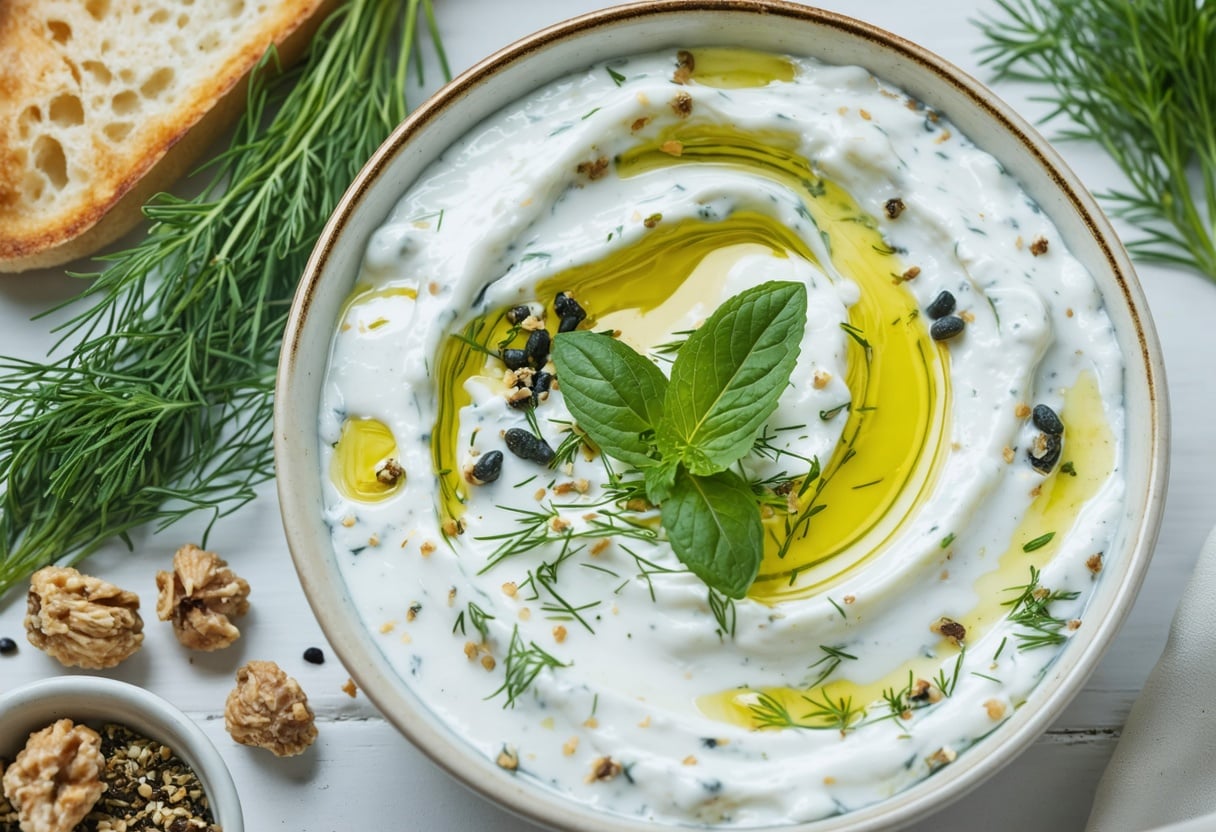
Haydari is the richer, more assertive cousin of tzatziki — thick strained yogurt beaten with garlic, fresh dill, dried mint, crushed walnuts, and a generous pour of olive oil. It's a fixture on any Turkish meze table, served cold alongside warm bread, olives, and whatever else is coming. The straining step is non-negotiable: you need that dense, almost cream-cheese texture for the dip to hold its character.
Scan to log · 248 kcal · 15g protein
Point a phone camera at the code to open this recipe — or scan it from a printout to drop today's serving straight into your food log.
Add to today's log →Prep
15 min
Cook
0 min
Rest
120 min
Total
135 min
Servings
4
Difficulty
Easy
What you need
Ingredients
full-fat plain yogurt (to strain down to ~2 cups / 480g strained)
4 cups
960g
garlic cloves
2 medium cloves
10g
fresh dill, fronds only, finely chopped
3 tablespoons
10g
dried mint
1 teaspoon
1g
walnuts, roughly chopped
3 tablespoons
25g
extra-virgin olive oil, plus more for serving
2 tablespoons
30ml
fine salt
1/2 teaspoon
3g
pul biber (Aleppo pepper) for garnish
1/2 teaspoon
1g
Substitution · hard-to-find
Original: pul biber (Aleppo or Maraş pepper). Mix 3 parts sweet paprika to 1 part red pepper flakes — you lose some of the fruity warmth but it works. Whole Foods and Middle Eastern markets usually carry Aleppo pepper if you want to seek it out.
pomegranate seeds for garnish (optional but traditional)
2 tablespoons
20g
How to cook it
Steps
- 01
5 min
Strain the yogurt: Line a fine-mesh strainer or colander with two layers of cheesecloth (or a clean, thin cotton kitchen towel) and set it over a bowl. Spoon in all 4 cups of yogurt, fold the cloth loosely over the top, and refrigerate for at least 2 hours — or overnight if you have time. You're aiming to lose roughly half the liquid whey, ending up with about 2 cups of thick, almost spreadable süzme yogurt. Don't skip this: thin yogurt makes a watery dip that slides off the bread.
- 02
5 min
While the yogurt strains, prep your aromatics. Peel the garlic cloves and mince them very fine, then sprinkle with a pinch of the salt and use the flat of your knife to smear them into a smooth paste against the cutting board. This removes any sharp raw-garlic bite and distributes the flavor evenly through the dip. Finely chop the dill fronds and roughly chop the walnuts.
- 03
3 min
Once the yogurt is fully strained, transfer it to a medium bowl. Add the garlic paste, chopped dill, dried mint, and salt. Beat vigorously with a fork or whisk for about a minute — you want the yogurt to lighten slightly and become very smooth. Taste and adjust salt.
- 04
2 min
Drizzle in the 2 tablespoons of olive oil and fold it in gently — don't over-mix at this stage or the dip can get slightly grainy. Fold in the chopped walnuts last so they stay distinct.
- 05
2 min
Spread the haydari onto a shallow plate or wide bowl, using the back of a spoon to make gentle swirls across the surface. Drizzle generously with additional olive oil (don't be shy — this is a meze, not a diet food), scatter the pul biber across the top, and add pomegranate seeds if using. Serve immediately at room temperature, or refrigerate for up to 2 days and bring back to room temp before serving.
Chef notes
Notes & variations
Greek-style strained yogurt (like Fage Total 5%) is an excellent shortcut — it's already thick enough that you can skip the straining step entirely, or just give it 30 minutes in the strainer for extra body.
The dried mint is doing something different here than fresh mint would. It has a more concentrated, slightly dusty flavor that's distinctly Turkish — don't substitute fresh mint, and don't leave it out.
Some Turkish home cooks add a small amount of crumbled white cheese (beyaz peynir, similar to feta) folded in at the end. It makes the dip richer and slightly saltier — worth trying if you have feta on hand.
Haydari should be noticeably thicker than tzatziki — it should hold a shape when spooned, not pool. If yours looks too loose after straining, give it another hour in the strainer.
Serve with warm flatbread, pide, or even toasted pita. On a full meze spread, it pairs naturally alongside ezme (spicy tomato-pepper salad), olives, and white cheese.
Per serving
Nutrition
Calories
248
Protein
15.4 g
Carbs
11.7 g
Fat
16.7 g
Fiber
0.6 g
Sugars
241 g
Sat fat
10 g
Sodium
422 mg
Minerals & vitamins
Potassium
352 mg
Calcium
564 mg
Iron
0.6 mg
Magnesium
3 mg
Vit D
0 IU
Vit B12
0 mcg
Cholesterol
58 mg
Glycemic profile
GI
31.4
GL
3.7
- · LLM tiebreak failed for "pul biber" — picked first result as fallback
Storage
How long it keeps
Fridge
4 days
Freezer
1 months
Room temp
2 hours
Reheating · Tzatziki, labneh dips. Drain off any whey that separates before serving.
Source: foodkeeper
Real products
Where to buy
Real grocery products surfaced via Open Food Facts. Click a product to see its OFF page (ingredients, allergens, Nutri-Score breakdown).
garlic cloves
- Whole garlic cloves in brine
Nutri-Score C
fresh dill, fronds only, finely chopped
dried mint
extra-virgin olive oil, plus more for serving
fine salt


