
Strength · Beginner
Alternate Hammer Curl
The hammer curl is a dumbbell exercise where you curl one arm at a time with your palms facing inward — like holding a hammer — rather than facing up. This grip works both the biceps and the forearms together, building the arm strength you rely on every day for carrying groceries, lifting grandkids, and opening heavy doors. Alternating arms lets you focus on one side at a time and helps even out any strength differences between your left and right.
Category
Strength
Difficulty
Beginner
Equipment
Dumbbell
MET
3.5
Primary muscles
Secondary muscles
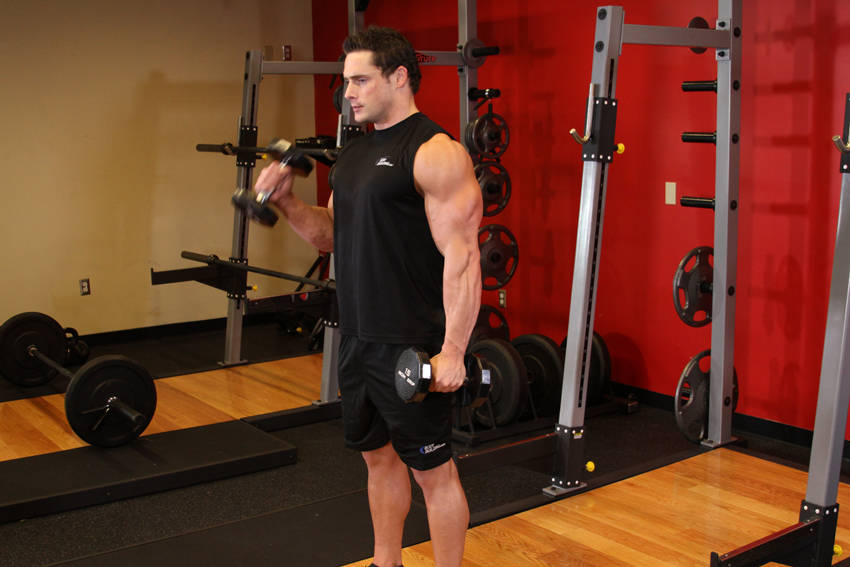
The movement
Form cues
- 01
Stand with your feet about hip-width apart, a dumbbell in each hand hanging at your sides.
- 02
Turn your palms so they face your thighs — they should stay facing inward throughout the entire movement.
- 03
Pin your elbows against your sides and keep them there; your upper arms should not swing forward or back.
- 04
Curl the right dumbbell up toward your right shoulder in a smooth arc, breathing out as you lift.
- 05
Pause for a full second at the top and give your bicep a deliberate squeeze.
- 06
Lower the weight slowly — take about two seconds on the way down — while breathing in.
- 07
Repeat with the left arm; one curl on each side counts as one repetition.
- 08
Keep your shoulders relaxed and level throughout — resist the urge to shrug or rock your body to help the weight up.
Dosage
How long, how many
Sets
3
Reps
8-12
Rest
60 sec
Watch for
Common mistakes
Swinging the torso back to lift the weight — if your back is arching or your hips are rocking, the weight is too heavy; go lighter.
Letting the elbows drift forward or flare out — your upper arm should stay vertical and glued to your side the whole time.
Rushing the lowering phase — if the dumbbell is dropping rather than being controlled, slow down; the downward half builds just as much strength.
Rotating the wrist so the palm faces up at the top — the whole point of a hammer curl is keeping that palm-in position from start to finish.
Gripping the dumbbell so hard your forearm shakes — hold it firmly but not in a death grip, especially if you have arthritis in your hands.
Scale it
Easier and harder variations
Easier
Sit in a sturdy chair with your back supported and do the curls seated, resting your elbow on your thigh for extra stability.
Use this if standing balance is a concern or if fatigue makes it hard to keep your form upright.
Harder
Pause for three full seconds at the top of each curl before lowering, then take four seconds to lower the weight back down.
Try this when the standard tempo feels too easy but you don't want to jump up in weight yet.
Note
If your wrist or elbow is bothering you, try a light resistance band looped under your foot instead of a dumbbell — it reduces joint stress while keeping the movement pattern.
Use during flare-ups of wrist, elbow, or forearm discomfort; stop if pain increases.
Sources
Form descriptions and cues are sourced from wger (CC-BY-SA 4.0) and the Free Exercise DB (public domain), edited for the 60+ audience. MET value cites Ainsworth BE, et al. 2011 Compendium of Physical Activities. Med Sci Sports Exerc 43(8):1575-1581.
- free-exercise-db · Unlicense / Public Domain
- claude