
Strength · Beginner
Single Leg Balance Touch Down
This exercise has you standing on one leg and reaching down to lightly touch the floor in front of you, then returning upright. It trains the balance, leg strength, and hip control you need for everyday tasks like stepping off a curb or catching yourself from a stumble. The single-leg stance also quietly works your ankle stability and the small muscles around your knee that often get neglected. Done slowly and with control, it's a surprisingly effective way to build confidence on your feet.
Category
Strength
Difficulty
Beginner
Equipment
Other
MET
8.0
Primary muscles
Secondary muscles
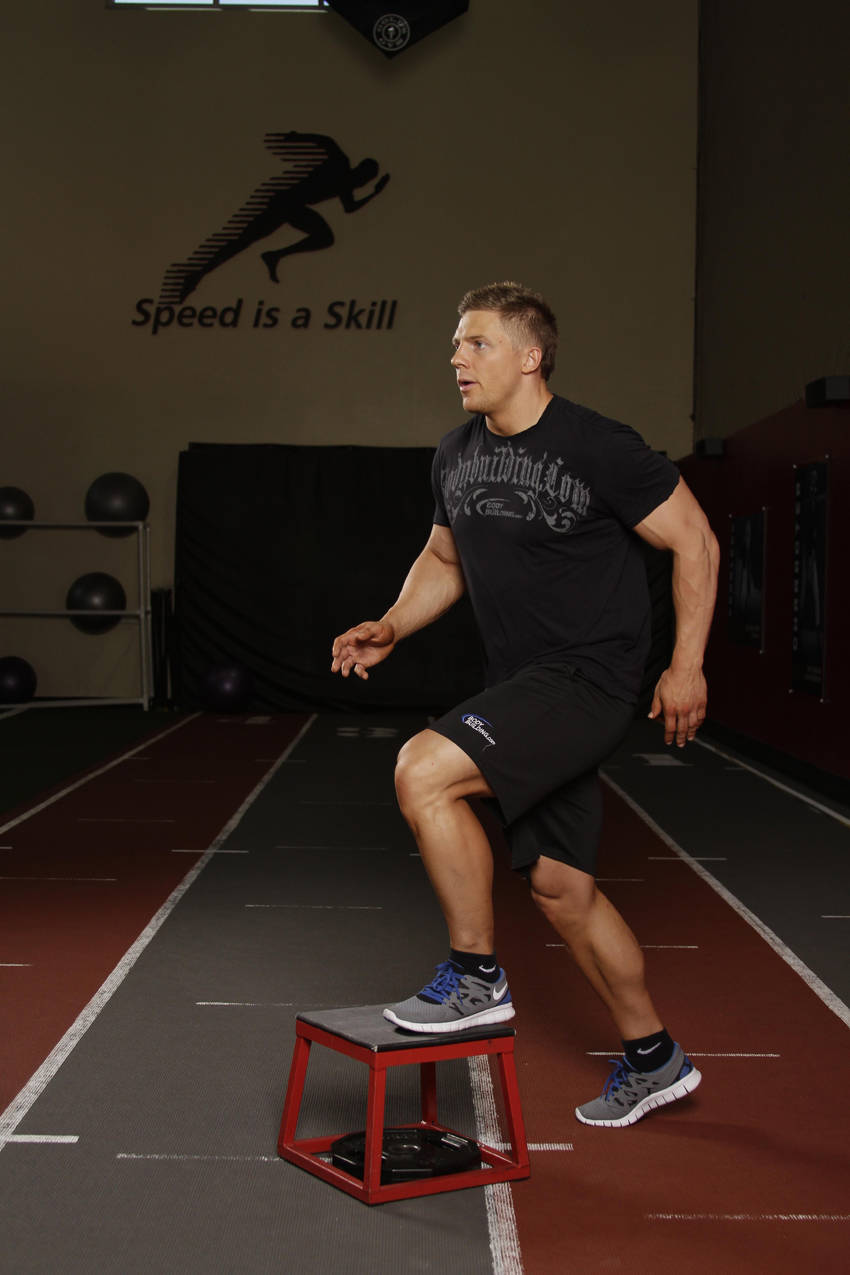
The movement
Form cues
- 01
Stand near a wall or sturdy chair in case you need a quick touch for balance.
- 02
Shift your weight onto one foot and lift the other foot just an inch off the floor.
- 03
Keep a soft bend in your standing knee — never lock it straight.
- 04
Slowly hinge at your hip and reach your free hand toward the floor in front of your standing foot.
- 05
Touch the floor lightly with your fingertips, then press through your heel to stand back up tall.
- 06
Keep your chest up and your eyes focused on a fixed point straight ahead — this steadies your balance.
- 07
Squeeze your stomach muscles gently throughout the movement, as if bracing for a light tap to the belly.
- 08
Return fully upright and pause for a breath before starting the next rep.
Dosage
How long, how many
Sets
3
Reps
8-12
Rest
60 sec
Watch for
Common mistakes
Letting the standing knee collapse inward — watch that your kneecap stays lined up over your second toe throughout the reach.
Rounding the back to reach the floor — the bend should come from your hip, not your spine; keep your chest lifted.
Rushing through the movement — if you're wobbling a lot, slow down; speed is what makes this harder, not easier.
Locking the standing knee straight — a stiff, locked knee actually makes balance harder and stresses the joint; keep a slight bend.
Looking down at your feet — dropping your gaze throws off your balance; pick a spot on the wall and keep your eyes there.
Scale it
Easier and harder variations
Easier
Keep one hand resting on a countertop or chair back the whole time, and only reach down a few inches instead of all the way to the floor.
Use this when balance feels uncertain or you're just starting out.
Harder
Reach to the side or behind you instead of straight ahead, or try touching a target on the floor farther away to increase the hip and balance challenge.
Use this once you can do 10 reps with steady control and no wobbling.
Note
If you have knee pain, limit how far you hinge forward — a small reach that keeps your shin nearly vertical puts far less stress on the knee.
Use this if you have knee arthritis or a recent knee injury.
Sources
Form descriptions and cues are sourced from wger (CC-BY-SA 4.0) and the Free Exercise DB (public domain), edited for the 60+ audience. MET value cites Ainsworth BE, et al. 2011 Compendium of Physical Activities. Med Sci Sports Exerc 43(8):1575-1581.
- free-exercise-db · Unlicense / Public Domain
- claude