
Strength · Beginner
Dead Bug
The dead bug is a floor exercise where you lie on your back and slowly extend opposite arms and legs while keeping your lower back pressed flat. It trains your deep core muscles to stabilize your spine — the same job they do every time you reach, carry, or twist in daily life. Unlike crunches, it puts almost no stress on your neck or lower back, making it a smart choice for people with back sensitivity.
Category
Strength
Difficulty
Beginner
Equipment
Bodyweight
MET
3.5
Primary muscles
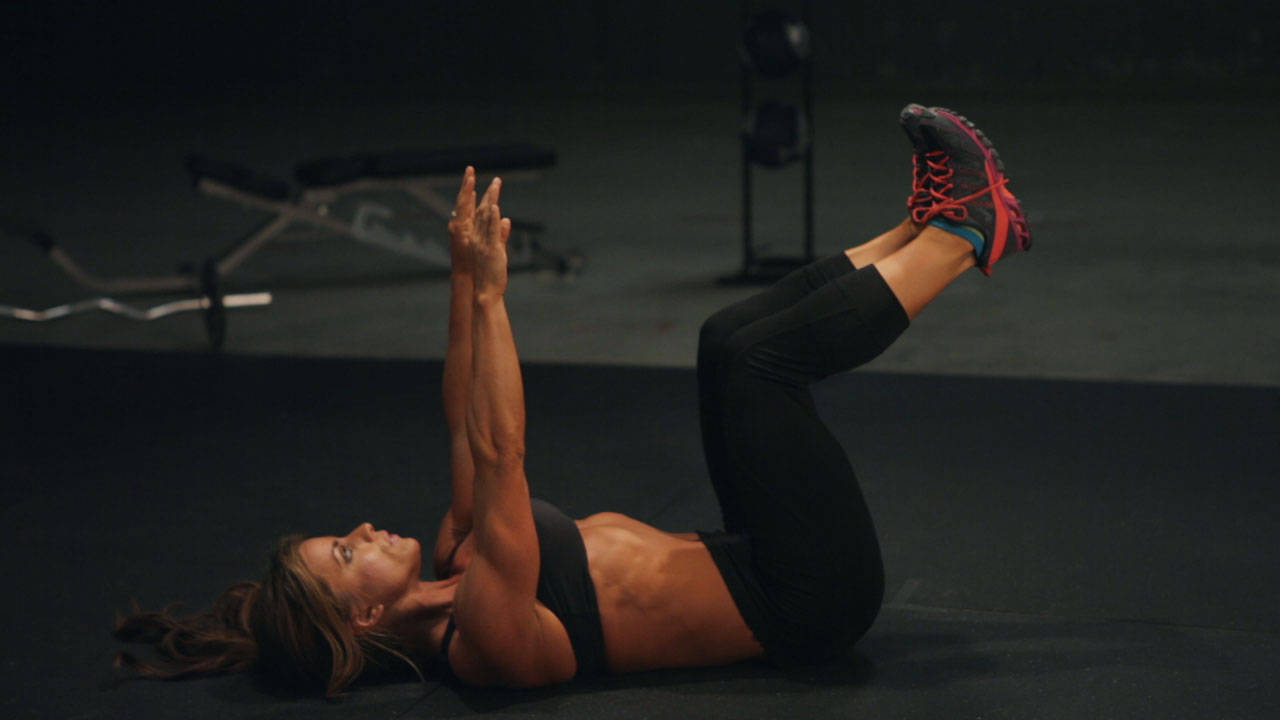
The movement
Form cues
- 01
Lie flat on your back on a firm surface — a yoga mat on the floor works well.
- 02
Raise both arms straight up toward the ceiling, directly over your shoulders.
- 03
Lift both knees so your hips and knees are each bent at 90 degrees, shins parallel to the floor.
- 04
Press your entire lower back into the floor — there should be no gap you could slide a hand under.
- 05
Take a breath in, then exhale fully and keep that lower back glued to the floor throughout the movement.
- 06
Slowly lower your right arm back toward the floor overhead while simultaneously straightening your left leg toward the floor — stop just before either touches down.
- 07
Pause for a count of two, then return both limbs to the starting position with control.
- 08
Repeat on the opposite side — left arm and right leg — and continue alternating.
Dosage
How long, how many
Sets
3
Reps
8-12
Rest
60 sec
Watch for
Common mistakes
Lower back arching off the floor — if you can slide your hand under your back, stop and reset by exhaling hard and pressing your spine down before continuing.
Moving too fast — if your limbs are swinging rather than floating, slow down until you can feel your stomach working the whole time.
Holding your breath — if you notice you've gone silent and stiff, exhale before each repetition and breathe steadily throughout.
Letting the raised knee drift — if your knee creeps toward your chest or drops toward the floor on the stationary side, actively hold it at 90 degrees the whole time.
Reaching the arm and leg too close to the floor — if your back lifts when you go low, only lower your limbs as far as you can while keeping contact with the floor.
Scale it
Easier and harder variations
Easier
Move only one limb at a time instead of opposite pairs — lower just one arm overhead while both feet stay up, then switch to just extending one leg while both arms stay up.
Use this if coordinating opposite arm and leg at the same time feels overwhelming or causes your back to lift.
Harder
Hold a light weight (2–5 lbs) in each hand as you extend your arms, adding resistance without changing the movement pattern.
Use this once you can complete 3 sets of 10 reps per side with your back flat the entire time.
Note
Keep your feet on the floor and only move your arms — slide one arm overhead along the floor while pressing your back down, then return and switch sides.
Use this if hip flexor tightness, a recent hip replacement, or lower back pain makes holding your legs up uncomfortable.
Sources
Form descriptions and cues are sourced from wger (CC-BY-SA 4.0) and the Free Exercise DB (public domain), edited for the 60+ audience. MET value cites Ainsworth BE, et al. 2011 Compendium of Physical Activities. Med Sci Sports Exerc 43(8):1575-1581.
- free-exercise-db · Unlicense / Public Domain
- claude