
Balance · Beginner
Single Dumbbell Front Raise
You hold one dumbbell with both hands and lift it straight out in front of you to shoulder height, then lower it back down. It strengthens the front and top of your shoulders, which matters for reaching overhead, lifting grocery bags, and keeping your arms steady throughout the day. Because both hands share the weight, it's easier to control than a single-hand raise — a good starting point if your shoulders have been out of action for a while.
Category
Balance
Difficulty
Beginner
Equipment
Dumbbell
MET
2.5
Primary muscles
Secondary muscles
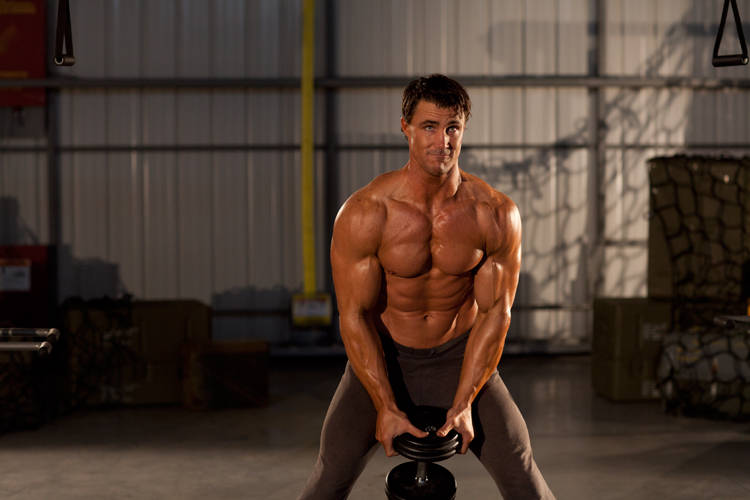
The movement
Form cues
- 01
Stand with your feet about hip-width apart and a slight bend in your knees — not locked straight.
- 02
Cup both hands around the top end (the head) of the dumbbell so it hangs vertically in front of your thighs.
- 03
Squeeze your stomach muscles gently, as if bracing for a light tap to the belly, and keep that tension throughout.
- 04
Lift the dumbbell in a smooth arc straight out in front of you, leading with the weight — not your elbows.
- 05
Stop when the dumbbell reaches roughly nose-to-forehead height; going higher rolls your shoulders forward and removes the benefit.
- 06
Keep your wrists flat and firm — don't let them bend back under the weight.
- 07
Lower the dumbbell slowly on the way down, taking about twice as long as the lift — this is where real strength is built.
- 08
Keep your back straight and your hips still throughout; if you're rocking backward to get the weight up, it's too heavy.
Dosage
How long, how many
Sets
3
Reps
8-12
Rest
60 sec
Watch for
Common mistakes
Swinging the torso backward to launch the weight up — if your lower back arches and your chest pops forward at the start of each rep, drop to a lighter dumbbell.
Raising the weight too high — lifting past shoulder height causes your shoulder blades to shrug and takes stress off the muscles you're trying to work; stop when the dumbbell is level with your nose.
Locking the elbows straight — a slight, soft bend in the elbow is fine and protects the joint; a fully rigid arm puts unnecessary strain on the elbow.
Letting the wrists collapse backward under the weight — if the dumbbell is tilting toward you at the top, the weight is too heavy or your grip needs to be firmer.
Rushing the lowering phase — if the weight drops quickly back to your thighs with a thud, you're missing half the exercise; control the descent.
Scale it
Easier and harder variations
Easier
Use a very light dumbbell (3–5 lbs) or substitute a full water bottle until you build shoulder endurance.
If your shoulders fatigue before completing 8 reps or if you feel strain in your neck.
Harder
Pause for a slow count of two at the top of each rep before lowering, keeping the dumbbell steady at shoulder height.
When 3 sets of 12 feel comfortable and controlled with no swaying.
Note
Sit upright in a sturdy chair with no armrests and perform the raise seated; this removes any temptation to use your back and reduces load on the lower spine.
If you have lower back pain, balance concerns, or are returning from a shoulder procedure and need a more controlled environment.
Sources
Form descriptions and cues are sourced from wger (CC-BY-SA 4.0) and the Free Exercise DB (public domain), edited for the 60+ audience. MET value cites Ainsworth BE, et al. 2011 Compendium of Physical Activities. Med Sci Sports Exerc 43(8):1575-1581.
- free-exercise-db · Unlicense / Public Domain
- claude