
Sardinian · Ogliastra / Barbagia highlands · mezze
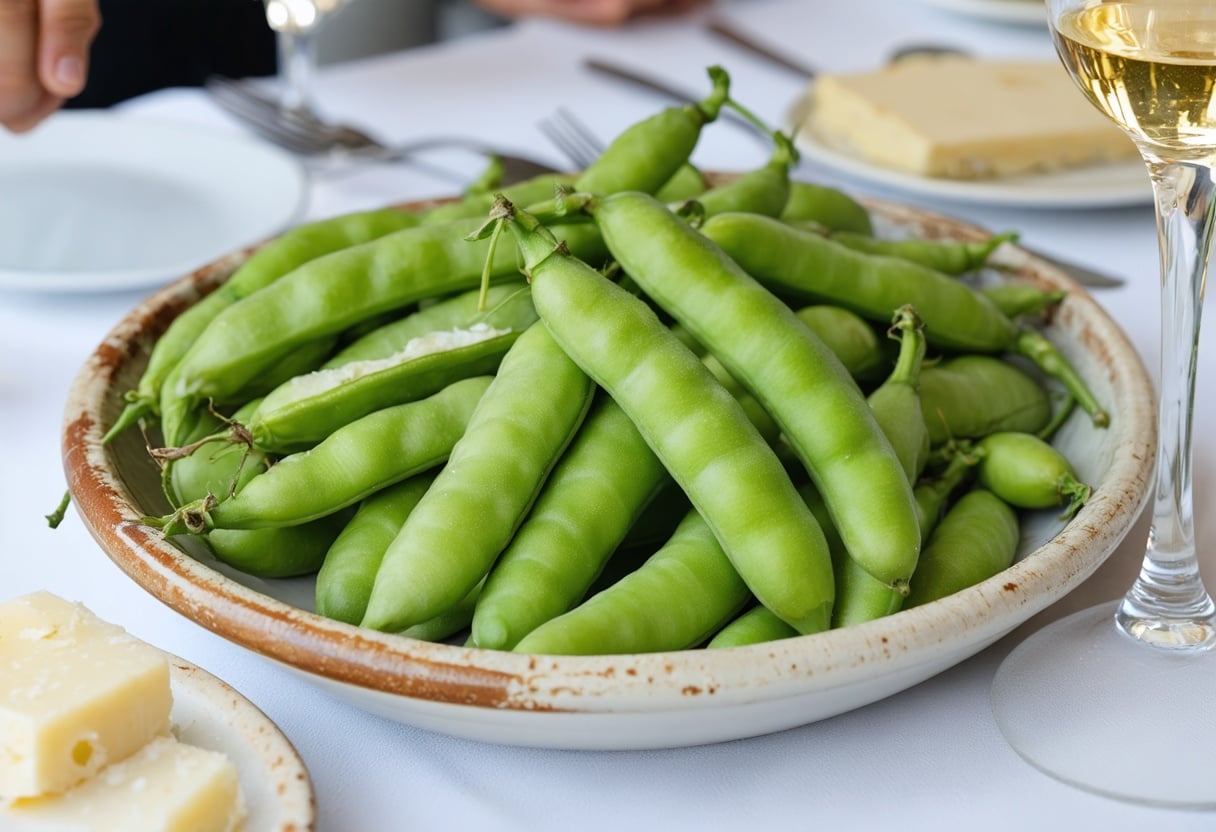
Fresh Fava Beans with Pecorino Sardo
fave e pecorino
On May 1st — Festa dei Lavoratori — Sardinians gather outdoors and pod fresh fava beans right at the table, eating them raw with thin shavings of young pecorino sardo and a glass of cannonau. No stove, no fuss: the whole point is the sweetness of beans pulled from the pod that morning and the milky, grassy bite of spring cheese. It's less a recipe than a ritual, and it travels beautifully to any American backyard or porch table.
Scan to log · 515 kcal · 45g protein
Point a phone camera at the code to open this recipe — or scan it from a printout to drop today's serving straight into your food log.
Add to today's log →Prep
15 min
Cook
0 min
Total
15 min
Servings
4
Difficulty
Easy
What you need
Ingredients
fresh fava beans in the pod
4 lbs (pods on)
1800g (pods on)
pecorino romano, young (semi-stagionato if available)
4 oz
115g
Substitution · hard-to-find
Original: pecorino sardo fresco (young, mild, slightly milky). Use the youngest, least-aged pecorino romano you can find — avoid the hard, very salty aged block. A mild manchego or young Asiago is a reasonable backup if pecorino romano still tastes too sharp.
extra-virgin olive oil
2 tbsp
30ml
flaky sea salt
1/2 tsp
2g
black pepper, freshly cracked
1/4 tsp
0.5g
lemon
1 whole (for wedges)
100g
How to cook it
Steps
- 01
10 min
If you're doing this the traditional way, bring the whole pods to the table in a bowl or basket and let everyone pod their own — that's part of the ritual. If you prefer to prep in the kitchen, snap open each pod along the seam and push the beans out with your thumb. You should get roughly 1 to 1¼ cups (about 180–200g) of shelled beans from 4 lbs of pods. Taste one raw bean: it should be sweet and grassy. If the skin on any bean feels thick or starchy, the beans are past their prime — still edible, but the magic is in very young, very fresh favas.
- 02
3 min
Using a vegetable peeler, a cheese plane, or a sharp knife, shave the pecorino into thin, irregular pieces — not cubes, not a thick slab. You want translucent-to-thin shavings so the cheese melts a little on your tongue alongside the raw bean. Arrange the shavings on a small plate or scatter them directly over the beans.
- 03
2 min
Arrange the shelled fava beans in a shallow bowl or spread them across a wooden board. Scatter the cheese shavings over and around the beans. Drizzle the olive oil in a thin stream over everything. Add a pinch of flaky salt and a few cracks of black pepper. Cut the lemon into wedges and set them alongside — a small squeeze brightens the beans without overwhelming them. Serve immediately with pane carasau or any good flatbread for scooping, and pour the cannonau.
Chef notes
Notes & variations
Freshness is everything here. Fava beans start converting sugar to starch within hours of picking. Buy them the morning you plan to serve them, or grow your own. Farmers markets in April–June are your best source in most of the US.
The inner skin of each fava bean is edible when the beans are very young and small (thumbnail-sized). Once the beans are larger — marble-sized or bigger — that pale skin turns bitter and chewy. For larger beans, pop the skin off each one after shelling: pinch the top and squeeze. It adds 5 minutes but transforms the dish.
Cannonau is Sardinia's high-polyphenol red grape (it's grenache under a different name). Any grenache or grenache-based blend — Côtes du Rhône, Spanish garnacha — is the right substitution and easy to find in the $12–18 range.
This is a May 1st dish in Sardinia because that's when favas peak. Outside that window, this recipe doesn't translate well to frozen or dried favas — it's specifically about the raw, fresh bean. Plan accordingly.
Portions look small by American standards. In the Sardinian context, this is a shared antipasto or a light lunch with bread and wine, not a standalone meal. Scale up the beans if you want it to stand alone.
Per serving
Nutrition
Calories
515
Protein
45.1 g
Carbs
82.7 g
Fat
11.1 g
Fiber
34.5 g
Sugars
42.3 g
Sat fat
6.6 g
Sodium
686 mg
Minerals & vitamins
Potassium
1555 mg
Calcium
479 mg
Iron
7.4 mg
Magnesium
163 mg
Vit D
6 IU
Vit B12
0.3 mcg
Cholesterol
30 mg
Glycemic profile
GI
39.4
GL
32.6
Storage
How long it keeps
Fridge
5 days
Freezer
2 months
Room temp
2 hours
Reheating · Muhammara, ajvar, romesco. Often improves after a day as flavors meld.
Source: foodkeeper
Real products
Where to buy
Real grocery products surfaced via Open Food Facts. Click a product to see its OFF page (ingredients, allergens, Nutri-Score breakdown).
pecorino romano, young (semi-stagionato if available)
extra-virgin olive oil
flaky sea salt
black pepper, freshly cracked
lemon


