
Italian · Nationwide · beverage
Italian Espresso (Moka Pot)
caffè
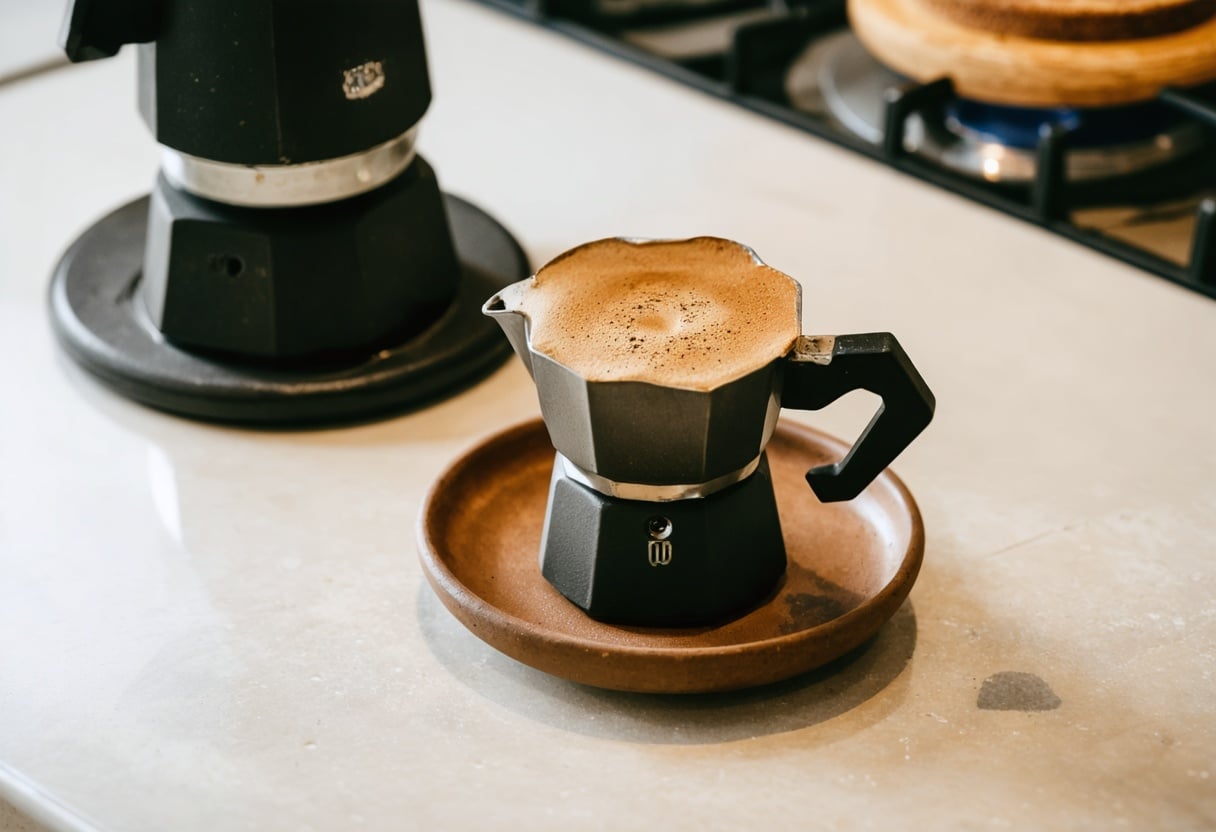
In Italian homes, caffè means moka pot — the stovetop brewer invented by Alfonso Bialetti in 1933 that still sits on nearly every Italian stove. This is the daily ritual: rich, espresso-strength coffee made in minutes, drunk standing at the kitchen counter or shared at the table after a meal. No machine required, no tamping, no fuss.
Scan to log · 1 kcal · 0g protein
Point a phone camera at the code to open this recipe — or scan it from a printout to drop today's serving straight into your food log.
Add to today's log →Prep
3 min
Cook
5 min
Total
8 min
Servings
2
Difficulty
Easy
What you need
Ingredients
finely ground espresso-roast coffee (Italian brands: Lavazza Rossa, Illy, or Kimbo)
3 tablespoons
18g
Substitution · availability
Original: Italian-brand espresso grind (Lavazza, Illy, Kimbo). Any espresso-roast coffee ground fine (not Turkish-fine, not drip-coarse — ask your coffee shop for 'moka grind') works well. Café Bustelo is widely available and produces an authentic result.
cold filtered water
2/3 cup
160ml
How to cook it
Steps
- 01
1 min
Unscrew your moka pot and remove the funnel filter basket. Fill the bottom chamber with cold filtered water up to the pressure-release valve — do not cover the valve. For a standard 2-cup (espresso-cup) moka pot this is about 2/3 cup (160ml). Using cold water gives you slightly more control over the brew; some Italians use room temperature.
- 02
1 min
Spoon the ground coffee into the funnel basket, filling it level to the rim — about 3 tablespoons (18g). Do NOT tamp or press it down. Tamping is for espresso machines; in a moka pot it restricts flow and can build dangerous pressure. Just fill level and brush any loose grounds off the rim.
- 03
1 min
Set the funnel basket into the bottom chamber and screw the top on firmly. Place the moka pot on the smallest burner you have over medium-low heat. Leave the lid open so you can watch.
- 04
4 min
Wait. In 3–4 minutes you'll hear a low gurgle, then see dark coffee begin to rise into the upper chamber. Once the flow turns from dark to a pale honey color — and the gurgle becomes a sputter — remove the pot from heat immediately. That sputtering sound means the water is nearly exhausted; letting it run dry scorches the coffee.
- 05
1 min
Run the base of the pot briefly under cold water (or set it on a cold surface) to stop the extraction. This is an old Italian trick that prevents the last bit of coffee from over-extracting. Stir the coffee in the upper chamber once with a small spoon — the first pour is stronger than the last, and a quick stir evens it out.
- 06
Pour into small espresso cups (demitasse) or short glasses. Serve immediately. In Italy this is drunk quickly while hot, often with a small piece of dark chocolate or a cornetto on the side.
Chef notes
Notes & variations
Grind matters more than anything else here. Too coarse and the coffee tastes thin and watery; too fine (Turkish-fine) and it can clog the filter or over-extract to bitterness. Ask for 'moka grind' or set your grinder one step finer than drip.
Moka pot sizing: Italian moka pots are sized in espresso cups (1-cup, 2-cup, 3-cup, 6-cup). Always brew a full pot — a half-filled basket brews unevenly. If you want one serving, use a 1-cup pot.
Aluminum vs. stainless: The classic Bialetti is aluminum. Stainless moka pots are fine and work on induction. Never put either in the dishwasher — soap strips the seasoning that builds up over hundreds of brews.
To make a caffè macchiato (the real one): pour your moka coffee into the cup, then add just a small spoonful of steamed or frothed milk. Not a latte. A stain (macchia) of milk.
For caffè corretto, the after-dinner version: add a small pour of grappa, sambuca, or brandy to the finished cup. Common in the north, especially Veneto.
Italians do not add sugar while brewing — sugar goes into the cup, stirred in before drinking. Or not at all.
Per serving
Nutrition
Calories
1
Protein
0 g
Carbs
0.2 g
Fat
0 g
Fiber
0 g
Sugars
0 g
Sat fat
0 g
Sodium
4 mg
Minerals & vitamins
Potassium
10 mg
Calcium
3 mg
Iron
0 mg
Magnesium
8 mg
Vit D
0 IU
Vit B12
0 mcg
Cholesterol
0 mg
Storage
How long it keeps
Fridge
3 days
Room temp
8 hours
Pantry
12 months
Reheating · Brewed: refrigerate within 1 hour. Dry: store airtight in a cool, dark cabinet.
Source: foodkeeper